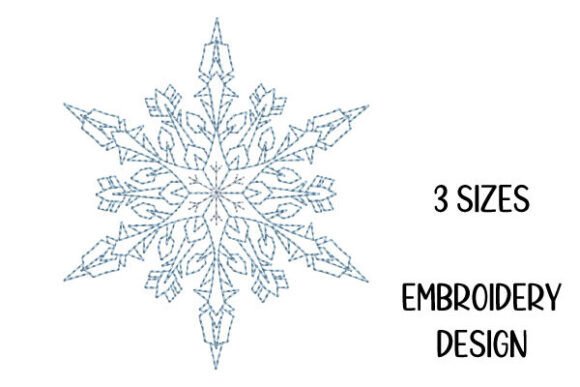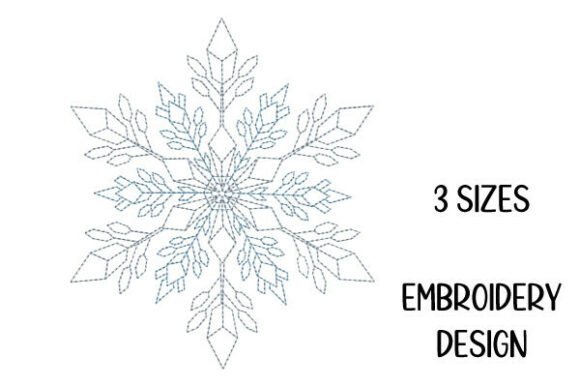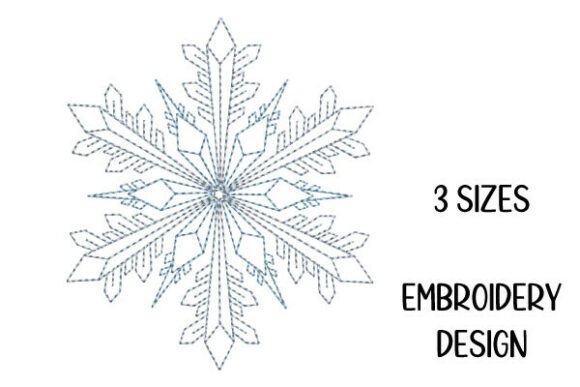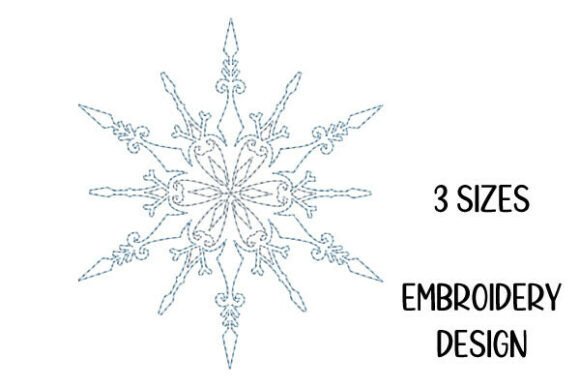
Minimal Snowflake Outline Embroidery
A Designer’s Real-World Review for Small Business Merchandise
As an embroidery designer who’s developed hundreds of commercial designs for cafés, boutiques, bakeries, florists, and handmade brands, I approach every new machine embroidery design with two questions: “Does it work—not just look pretty—and does it strengthen the brand?” When I first saw Minimal Snowflake Outline Embroidery, my instinct was positive—but not because it’s festive. It’s because its restraint signals intentionality. That matters deeply when you’re stitching a logo on staff aprons or a patch for customer gift totes.
First Impression: Modern, Calm, and Professionally Versatile
The title and description—“Discover the beauty of simplicity… artfully celebrates winter’s wonder”—immediately set expectations: this isn’t a busy, glittery, or cartoonish snowflake. It’s clean. Linear. Confident in its negative space. To a small business owner, that reads as elegant, not decorative; premium, not seasonal gimmickry. For a florist launching winter gift bundles or a ceramic studio releasing limited-edition mugs, Minimal Snowflake Outline Embroidery feels like a subtle signature—not a holiday sticker.
Where It Shines in Real Business Use
This design excels where clarity, consistency, and craft credibility matter most:
- Embroidered patches: Perfect for iron-on or sew-on branding on tote bags, denim jackets, or product packaging—its outline holds integrity at 1.5"–2.5" sizes without fill distortion.
- Staff uniforms and aprons: Appears crisp on cotton twill or canvas without overwhelming fabric texture. Its low stitch density means faster production and less thread breakage across dozens of units.
- Cap embroidery: Works beautifully on front panels or side gussets—especially when paired with a small business name in clean sans-serif. The open structure avoids puckering on curved surfaces.
- Tote bag design and boutique merchandise: Scales well from 3" (centered on organic cotton) to 1.25" (corner accent on linen tea towels). Customers perceive it as handmade but polished—not DIY amateur.
- Product labels and packaging accents: Think embroidered tags on handmade soap, stitched onto kraft paper gift wrap, or as a subtle repeat motif on bakery napkins. It adds tactile sophistication without shouting.
Where to Use It Thoughtfully
Even strong designs have boundaries—and respecting them protects your brand’s professionalism:
- Avoid sub-1" patch sizes: Fine outlines can blur or disappear on dense fabrics like fleece or heavy canvas. Always test at your smallest intended size.
- Curved surfaces demand stabilizer strategy: Caps and sleeves need cutaway + tear-away combo stabilizers—don’t rely on basic fusible alone. The outline’s thinness makes it sensitive to fabric movement.
- Dark uniforms require contrast testing: A white or silver thread may lack visibility on charcoal or navy. Try heather gray or matte charcoal thread for tonal subtlety—or go bold with icy blue for differentiation.
- Frequent-wash items need stitch security: While low-density, ensure jump stitches are trimmed and underlay is present beneath key anchor points. This prevents fraying after 30+ laundry cycles.
Brand Identity Impact: More Than Just a Winter Motif
Don’t underestimate how much Minimal Snowflake Outline Embroidery contributes to long-term brand perception. Unlike ornate or highly literal motifs, its abstraction invites interpretation—it feels personal, not generic. For a pet brand adding seasonal charm to bandanas, it suggests care and quiet joy. For a local coffee roaster, it hints at alpine freshness without leaning into cliché. That nuance builds trust: customers sense intention behind every stitch.
It also supports visual consistency. Because it’s outline-only, it pairs seamlessly with your existing design assets—logos, typography, icons—without competing. You can use it alongside a serif wordmark on aprons and switch to monochrome thread on black caps, knowing the shape remains instantly recognizable. That cohesion increases recall, especially across touchpoints like event merch, Etsy listings, and printed mockups.
Practical Notes Every Embroidery Designer Should Follow
Before committing to production—whether for your own shop or a client’s order—run these checks:
- Test the digital embroidery file in black and white first. Does the outline read clearly without color distraction?
- Resize it to your smallest intended use (e.g., 1.25" cap front) and inspect spacing between arms—no gaps should collapse or merge.
- Review thread color contrast on your target fabric swatch—not just on screen.
- Confirm hoop size compatibility. Some minimalist outlines require precise centering; verify alignment markers or registration points are included.
- Stitch a sample on your actual fabric—especially textured or stretchy materials—to assess stabilizer performance and thread tension.
- Create a printable mockup for client approval. Show it on multiple applications: apron chest, tote corner, cap front. Context changes perception.
- Compare it beside other design assets. Does it harmonize? Does it stand out enough to serve as a visual anchor?
- Verify commercial licensing. Since this is intended for small business merch, confirm the embroidery file permits unlimited production runs and resale of finished goods.
Final Thought: Simplicity Is Strategic
Minimal Snowflake Outline Embroidery isn’t just a winter-themed embroidery design. It’s a tool—a versatile, scalable, and quietly confident element that elevates custom apparel, strengthens brand identity, and delivers handmade authenticity without sacrificing polish. Whether you’re embroidering 5 staff aprons or 500 limited-edition totes, this design earns its place by doing more with less. And in small business merch, that balance—between charm and clarity, seasonality and staying power—is everything.