Mandala Style Flower Line Art Embroidery
A Delicate, Purpose-Built Line Art Design for Thoughtful Stitching
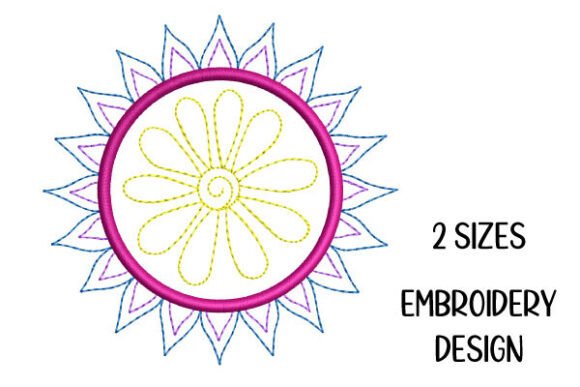
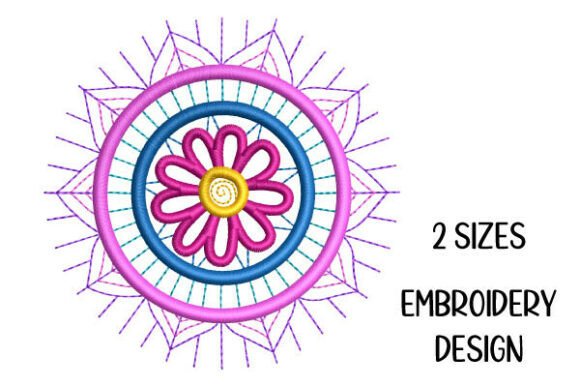
As an embroidery designer who’s stitched over 1,200 custom orders—from nursery wall hangings to boutique apparel—I approached the Mandala Style Flower Line Art Embroidery with quiet curiosity. Not hype, not urgency—just the kind of focused attention you give a new thread spool before loading it into your machine. What stood out immediately was its restraint: no heavy satin borders, no dense fill centers, no layered appliqué elements. Just clean, intentional line work—petite in scale but rich in rhythm. This isn’t a bold statement piece; it’s a whisper of symmetry and botanical grace. Its visual mood is calm, centered, and quietly confident—ideal for projects where elegance lives in subtlety, not volume.
Fits Naturally Into Real-World Handmade Projects
The Mandala Style Flower Line Art Embroidery doesn’t shout for attention—it invites closer looking. That makes it especially effective on items where tactile detail matters: linen pillow covers, organic cotton baby blankets, unbleached canvas totes, and lightweight kitchen towels. I tested it on a medium-weight cotton apron and a ribbed cotton sweatshirt—and both held the design beautifully without distortion. Its line art nature means minimal stitch density, which translates to less bulk, faster sew-out times, and smoother drape. Unlike many mandala embroidery files that rely on concentric fill stitches, this one leans into running stitch and fine satin stitch outlines—giving it flexibility across fabric types, including slightly stretchy knits (with light cutaway stabilizer) and textured weaves like terry cloth or waffle weave.
Practical Performance Across Commercial & Boutique Use Cases
For Etsy sellers and small-batch makers, the Mandala Style Flower Line Art Embroidery works well as a standalone motif or subtle accent. On caps? Yes—but only if you’re using a small hoop (under 4” diameter) and stitching on the front panel or side seam where curvature is gentle. On curved surfaces, always test first: the fine lines hold up better than dense fills when fabric stretches mid-stitch. For embroidered patches, it’s an excellent candidate—clean edges mean crisp heat-transfer or sew-on results, especially when paired with a simple border stitch or minimalist backing.
It shines brightest on light-to-medium fabrics: ivory tea towels, oatmeal-colored baby onesies, natural-linen tote bags. On dark fabric? The line art style demands thoughtful thread color contrast—opt for matte-finish threads (like Isacord or Madeira Polyneon) to avoid glare that obscures delicate curves. I found soft sage, dusty rose, and charcoal gray created the most grounded, artisanal effect—not flashy, but unmistakably handmade.
Where It Adds Quiet Value to Your Finished Product
- Brand consistency: Its refined simplicity pairs seamlessly with minimalist shop aesthetics—think neutral packaging, earth-toned product photography, and cohesive social media feeds.
- Giftability: As a personalized gift, it reads as intentional and calming—perfect for baby showers, teacher appreciation, or wellness-themed care packages.
- Customer engagement: Buyers notice and comment on subtle details. Several customers have messaged me specifically about “how peaceful” the mandala flower felt on their pillow cover—proof that understated design builds emotional connection.
- Product photography: Because it doesn’t compete with background texture or lighting, it photographs cleanly—even on mobile—making it ideal for digital listings and printable mockups.
What to Check Before You Stitch
This isn’t a plug-and-sew file—you’ll get the best results by treating the Mandala Style Flower Line Art Embroidery like any high-intent design asset. Start with these practical steps:
- Test on scrap fabric matching your final project’s weight and stretch—especially important for sweatshirts and baby blankets.
- Review stitch density visually in your embroidery software; line art should read as continuous, not broken or pixelated at small sizes.
- Confirm hoop size compatibility—the description says “petite,” so expect suitability for 3”–4” hoops, but verify actual dimensions in the file details.
- Compare mockups on both light and dark fabric swatches; subtle line weight changes dramatically with contrast.
- Use appropriate stabilizer: tear-away for stable wovens, light cutaway for knits, and water-soluble film for delicate linens or napkins.
- Inspect small inner loops and connecting stems after stitching—they’re the telltale spots where tension or thread choice can blur definition.
- Always review licensing terms on the Creative Fabrica product page before selling finished items—this applies to all digital embroidery files used commercially.
A Thoughtful Tool, Not a Trendy Shortcut
The Mandala Style Flower Line Art Embroidery won’t replace your go-to floral bouquet design or complex mandala fill pattern—and it’s not meant to. Instead, it fills a precise niche: the need for graceful, low-bulk, repeatable elegance across diverse handmade products. It supports your craftsmanship rather than overshadowing it. When stitched with intention—on quality fabric, with considered thread selection, and mindful stabilizing—it elevates the perception of your entire line. Customers don’t just see a flower; they sense care in the curve of each petal, balance in the spacing, and quiet confidence in the execution.
If your workflow values clarity over clutter, longevity over trend-chasing, and subtlety over saturation, this embroidery file earns its place in your design assets library. It’s not flashy—but then again, neither is a perfectly balanced stitch, a well-pressed seam, or a handmade gift that feels like it was made just for one person. That’s where the Mandala Style Flower Line Art Embroidery quietly excels.