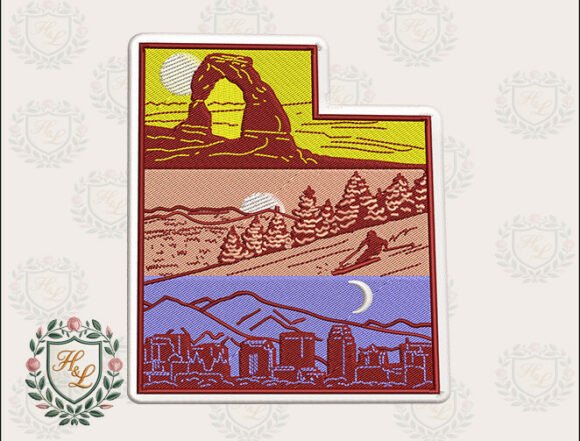
Layers of Utah Embroidery Files
A Designer’s First Look: Clean, Confident, and Quietly Meaningful
When I opened Layers of Utah Embroidery Files, what struck me wasn’t flash—it was clarity. This is a machine embroidery design that feels intentional: clean outlines, thoughtful negative space, and a layered silhouette that reads instantly as mountain terrain—no guesswork, no over-explanation. As an appliqué design, it leans into texture without demanding perfection from the stitcher. It doesn’t shout “Utah!” with flags or slogans; instead, it whispers it through contour and balance. That subtlety makes it ideal for boutique apparel, handmade gifts, and small shop products where customers value craftsmanship over clutter.
Real Project Test: A Custom Tote Bag for a Local Outdoor Shop
Last week, I stitched Layers of Utah Embroidery Files onto a natural canvas tote for a Salt Lake City–based outdoor retailer. We used medium-weight cutaway stabilizer, 40-weight polyester thread, and a standard 5” x 7” hoop. The result? Crisp satin stitch edges on the mountain layers, smooth fill stitch transitions, and zero puckering—even across the tote’s slightly textured surface. Customers responded immediately: “That looks like *my* hike,” one said. That kind of quiet resonance is rare. It’s not just decoration—it’s recognition. And that’s gold for any craft business or Etsy seller building emotional connection through custom apparel or personalized gifts.
Where It Shines—and Where to Pause
Layers of Utah Embroidery Files performs exceptionally well on stable, midweight fabrics: cotton tees, twill aprons, linen pillow covers, and brushed cotton sweatshirts. On baby embroidery (think organic cotton onesies), it holds up beautifully at reduced scale—just confirm your hoop size first. For holiday embroidery or wedding gifts, pair it with neutral thread colors (heather gray, oatmeal, deep sage) to keep the focus on shape and sentiment.
But here’s where attention matters: avoid using it on highly stretchy knits without proper tear-away + cutaway combo stabilizer. Thin fabrics like lightweight rayon or silk-blend tea towels need extra backing—or consider simplifying the design by omitting the innermost layer in your editing software. On dark fabric, test thread contrast early: light tans or soft creams read clearly, but pale yellows can fade. And while the design flows naturally on flat surfaces, skip curved applications like structured caps unless you’ve tested the layout in your embroidery software’s preview mode.
Stitching Clarity Meets Commercial Practicality
This isn’t just a pretty embroidery file—it’s a smart design asset. The stitch density feels balanced: dense enough to hold structure on a finished product, open enough to avoid stiffness on wearable items. No dense fill traps moisture or adds bulk to baby embroidery. No overly tight satin borders snag during washing—critical for kitchen towels or nursery decor meant to be used daily. That reliability directly supports customer trust. When a buyer sees a cleanly stitched Layers of Utah Embroidery Files on a boutique sweatshirt, they don’t see “machine-made.” They see care. That perception lifts perceived value—and justifies higher pricing for small shop owners and creative entrepreneurs.
Design Notes Every Embroiderer Should Run Before Stitching
- Test on scrap fabric first—especially if pairing with textured weaves or eco-friendly blends.
- Check thread color contrast on both light and dark backgrounds before committing to a full run.
- Review stitch density in your embroidery software—look for areas where fill and satin meet; adjust if needed for your fabric type.
- Confirm hoop size matches your machine’s standard capability; this design fits comfortably in 4” x 4” and larger hoops.
- Inspect small details at 200% zoom: are inner mountain contours legible? Does the base layer anchor cleanly?
- Test in black-and-white mockups—it reveals contrast issues faster than color previews.
- Use proper stabilizer: cutaway for knits, medium-weight tear-away for stable wovens, and fusible + cutaway for lightweight linens.
- Verify licensing before selling finished products or bundling Layers of Utah Embroidery Files as part of digital product previews.
Why It Fits North America’s Maker Ecosystem So Well
This embroidery file quietly mirrors how many North American makers work today: thoughtfully regional, visually grounded, commercially viable. It avoids cliché while still feeling unmistakably place-based—a rarity in digital embroidery files. Whether you’re an apparel decorator building a local brand identity, an Etsy seller curating a “Mountain State” collection, or a holiday embroidery specialist prepping limited-run gifts, Layers of Utah Embroidery Files slots in without forcing itself. It doesn’t demand attention—it earns it, stitch by careful stitch.
Final Thought: Not Just Another Appliqué Design
There’s a difference between a design that stitches and a design that lands. Layers of Utah Embroidery Files lands. It works as a standalone embroidered patch, a subtle chest accent on a denim jacket, a grounding element on a nursery wall hanging, or the quiet signature on a small shop’s packaging. It respects the hand behind the machine—and the hands holding the finished product. For designers, sellers, and makers who build meaning into every stitch, this isn’t just another digital embroidery file. It’s a reliable, resonant, and quietly professional tool.