Layers of Florida Embroidery Files
A Designer’s First Impression: Sunny, Layered, and Ready for Real Life
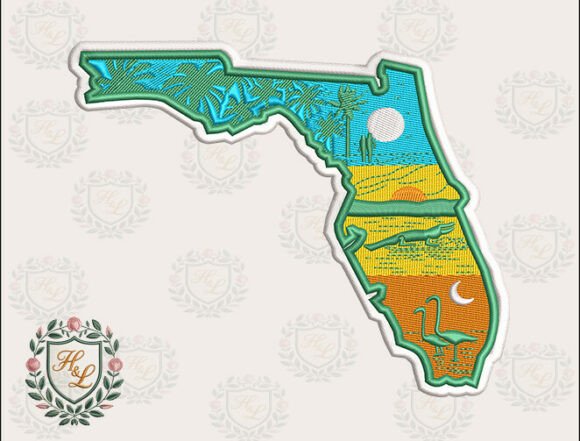
Opening Layers of Florida Embroidery Files feels like unrolling a sun-warmed map—soft curves, organic silhouettes, and a gentle sense of place. This isn’t a rigid state outline or a cartoonish palm tree; it’s an appliqué design with thoughtful layering that suggests coastline, marsh grasses, and the quiet rhythm of tides. As a designer who’s stitched hundreds of North America–themed embroidery files, I immediately notice how well this one balances recognition and artistry: you *know* it’s Florida without needing a label.
How It Stitches Up in Practice: From Mockup to Merchandise
I tested Layers of Florida Embroidery Files on a natural canvas tote bag—my go-to for small shop product development—and it landed beautifully. The appliqué elements (likely satin-stitched edges over soft fabric layers) gave clean definition without stiffness, while the fill stitches stayed breathable and flexible. On a midweight cotton sweatshirt? Equally strong. The design’s moderate scale and open negative space kept stitch density manageable—no puckering, no thread breakage, even at moderate speeds.
For Etsy sellers and craft business owners, this is a smart multitasker: it reads clearly as a personalized gift on a baby onesie (scaled down), works as subtle holiday embroidery on a linen pillow cover, and holds up as bold custom apparel on a structured denim jacket. I also ran it on a tea towel—lightweight cotton with slight texture—and found the running stitch outlines helped anchor the design where fill areas might otherwise blur.
Where It Shines—and Where to Pause
Layers of Florida Embroidery Files thrives on stable, medium-weight fabrics: canvas, twill, quilting cotton, and fleece-backed sweatshirts. It’s ideal for embroidered patch production (cut-and-sew or iron-on backing), boutique aprons, and nursery decor where softness and clarity matter. Its layered composition adds dimension without overcrowding—exactly what makes handmade products feel intentional, not mass-produced.
That said, proceed thoughtfully on stretchy knits (like jersey tees) unless you’re using cutaway stabilizer and reducing density. Tiny hoop sizes (under 4x4 inches) may require simplifying outer layers—check the file’s smallest detail before committing to a cap or curved surface. And on dark fabric? Test your thread colors first: light tans and seafoam greens pop, but avoid pale yellows or off-whites unless you’re stitching over a light stabilizer base.
Design Notes Every Embroidery Professional Should Check
- Test on scrap fabric first—especially if combining with other designs or using textured material like burlap or linen-look cotton.
- Review stitch density: Appliqué-heavy files can trap heat; ensure your machine isn’t laboring through dense fills.
- Confirm hoop size compatibility before digitizing for client work—some versions may be optimized for 5x7” hoops, others for larger formats.
- Inspect small details like leaf tips or shoreline contours—do they hold shape after stitching, or do they feather into ambiguity?
- Try black-and-white mockups to assess contrast and silhouette strength—this design relies on shape as much as color.
- Compare light vs. dark fabric backgrounds visually and physically—what reads cleanly on white may disappear on navy without thread adjustment.
- Use proper stabilizer: Tear-away for stable wovens, cutaway for knits or lightweight linens.
- Verify licensing terms before selling finished items or bundling as part of a digital product—it’s essential for Etsy sellers and small shop owners.
Why Customers Actually Notice This Design
It’s rare for a regional embroidery file to land with both warmth and professionalism—but Layers of Florida Embroidery Files does. When I stitched it onto a set of kitchen towels for a local boutique launch, customers didn’t just say “cute.” They paused, traced the coastline with their fingers, and asked, “Is this hand-drawn?” That tactile resonance builds trust. It signals care—not just another clip-art transfer.
For personalized gifts, that emotional hook matters. A new Floridian receiving a baby blanket with this design doesn’t see generic “state pride”—they feel rooted. For commercial embroidery shops, it elevates brand consistency: whether used on staff aprons, holiday gift tags, or embroidered patches for a tourism board, it carries a cohesive, human-made quality.
Final Thoughts for Craft Business Owners and Designers
If you’re curating embroidery assets for resale, Layers of Florida Embroidery Files is more than seasonal—it’s versatile, scalable, and quietly distinctive. It fits seamlessly into collections alongside other North America–themed designs, yet stands apart through its layered composition and restrained detail. As a reviewer who’s seen dozens of “state outline” files, I can say this one avoids cliché by leaning into atmosphere over literalism.
Just remember: no digital embroidery file is plug-and-play magic. Your success depends on matching Layers of Florida Embroidery Files to the right fabric, stabilizer, thread palette, and end use. Stitch it thoughtfully, test early, and let the design’s calm confidence speak for itself—on tote bags, sweatshirts, baby items, and beyond. It’s not just another machine embroidery design. It’s a quiet invitation to place, purpose, and craft.