Cute Otter Family Embroidery
A Designer’s First Look: Whimsy That Lands, Not Just Cutesy
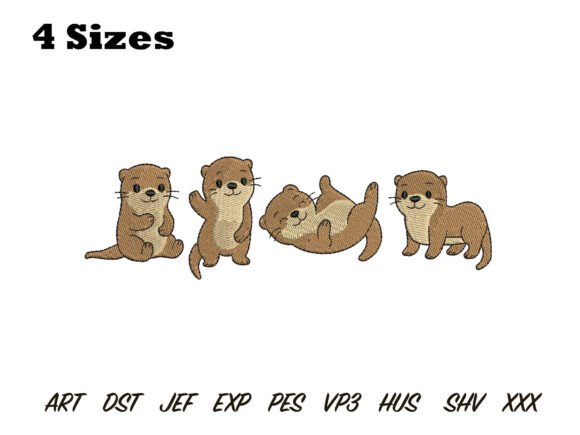
When I opened the Cute Otter Family Embroidery file for the first time, what struck me wasn’t just how sweet it looked on screen—but how *intentional* it felt. Three otters nestled together in gentle curves: one upright, two leaning in, paws nearly touching. No forced symmetry, no cluttered details—just soft outlines, expressive eyes, and a subtle sense of movement. It’s clearly rooted in the Baby Animals category, but it avoids infantilizing charm. Instead, it reads as warm, grounded, and quietly joyful—perfect for a handmade product that needs to feel both personal and polished.
Real Project Test: A Custom Baby Shower Tote Bag
Last week, I used Cute Otter Family Embroidery on a natural canvas tote for a client’s baby shower gift. The fabric was medium-weight, tightly woven, and lightly textured—not ideal for ultra-fine detail, but perfect for this design’s scale and rhythm. I chose a light heather gray base and paired it with soft oatmeal and muted teal thread colors. What stood out immediately was how well the stitch density held up: no puckering, no skipped stitches, and the satin-stitched otter outlines stayed crisp without looking stiff. The fill stitches were generous but breathable—no heavy buildup that would make the tote feel stiff or unyielding after washing. Customers noticed it right away: “It looks handmade, not mass-produced,” one told me. That’s the quiet power of a well-balanced machine embroidery design.
Where This Design Truly Shines
- Custom apparel: Works beautifully on crewneck sweatshirts and relaxed-fit tees—especially when placed slightly off-center on the chest or upper back.
- Baby embroidery: Ideal for onesies, burp cloths, and crib bumper tags—its rounded forms avoid sharp corners that could irritate delicate skin.
- Kitchen and home textiles: On tea towels and pillow covers, the otters read clearly at arm’s length, adding character without overwhelming the item’s function.
- Embroidered patch: Easily converted into an iron-on or sew-on patch—clean edges and moderate stitch count mean it holds shape through repeated wear.
- Holiday embroidery: Paired with a simple “Welcome Winter” or “Otterly Yours” script (added separately), it softens seasonal themes without leaning into cliché.
Where to Proceed With Care
This isn’t a one-size-fits-all embroidery file. Its strengths lie in balance—and that means knowing where to pause before stitching:
- Small hoop sizes: The full family layout needs breathing room. If you’re working with a 4x4 hoop, consider using just one otter—or confirm whether a scaled-down version is included.
- Textured or stretchy fabric: On terry cloth towels or lightweight knits, use cutaway stabilizer underneath and tear-away on top. Skip the design on highly ribbed or slubbed fabrics unless you’ve tested first.
- Dark fabric: The otters rely on subtle tonal shifts. On black or navy, avoid low-contrast thread choices—even a slight mismatch dulls the warmth. Always test thread colors on scrap first.
- Curved surfaces: Caps and beanies require re-digitization or careful placement. As-is, Cute Otter Family Embroidery is best suited for flat or gently contoured items like tote bags or aprons.
- Frequent-wash items: While the stitch density feels durable, avoid dense satin borders on high-friction zones like pocket edges or waistbands—opt for running stitch accents instead.
What It Adds to Your Craft Business—Beyond the Stitch
For Etsy sellers and small shop owners, Cute Otter Family Embroidery does more than decorate—it builds trust. Its cohesive, non-trendy aesthetic signals care and consistency. When customers see it on your branded tote or nursery pillow cover, they don’t just register “cute animal.” They register your eye: thoughtful curation, attention to texture and scale, confidence in execution. That translates directly to repeat buyers and word-of-mouth referrals.
It also works hard across formats. Use it as-is for custom apparel, adapt it into a printable mockup for your shop listings, or layer it into a larger design assets bundle for digital embroidery sellers. Because it avoids tiny lettering, excessive interior detail, or overly tight fills, it scales cleanly for both physical products and digital previews.
Practical Designer Notes Before You Stitch
- Always run a test on scrap fabric matching your final project’s weight and weave.
- Check thread color contrast against both light and dark backgrounds—don’t assume screen preview matches reality.
- Review stitch density visually: look for any areas where fill stitches might compress too tightly or satin lines might overlap awkwardly.
- Confirm hoop size compatibility—especially if you plan to offer multiple sizes (e.g., small otter solo vs. full family).
- Inspect small details like paw pads and ear curves in zoomed-in view—they should digitize cleanly without jagged vectors.
- Test in grayscale mockups to assess value contrast before committing to thread choices.
- Use appropriate stabilizer: medium-weight cutaway for knits, tear-away for stable wovens, and fusible + tear-away combo for lightweight linens.
- If selling finished products, verify licensing terms—some digital embroidery files restrict commercial use unless upgraded.
Final Thought: Charm With Craftsmanship
Cute Otter Family Embroidery doesn’t shout. It invites. It fits naturally into a craft business that values authenticity over algorithm-chasing—whether you’re stitching a single personalized gift or producing a line of boutique nursery decor. It’s the kind of embroidery project that reminds you why you started creating in the first place: to make things that feel human, held, and quietly meaningful. And when your customer runs their fingers over those smooth satin otter outlines and smiles? That’s not just a finished product—that’s a moment earned.