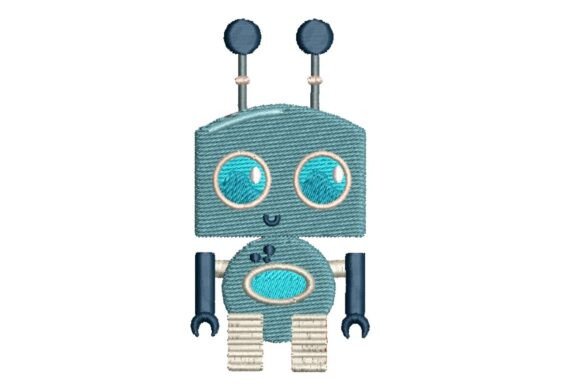
Cute Little Blue Robot Embroidery Design
First Impression: Whimsical, Friendly, and Instantly Recognizable
As an embroidery designer who’s curated over 200 craft fair booths in the past decade, my gut reaction to Cute Little Blue Robot Embroidery Design is immediate and positive: it’s a smile-inducer. Not “futuristic” in a cold, technical sense—but warm, approachable, and full of personality. The soft blue-green palette suggests calm curiosity rather than sci-fi intensity. It lands squarely in the “whimsical modern” lane—neither too cutesy for adult buyers nor too sterile for kids’ items. At a glance, it reads as handmade, intentional, and joyful—exactly the emotional hook you want when shoppers pause at your booth for less than three seconds.
Where This Design Shines on Craft Fair Products
Tote bags: A standout. Positioned front-and-center on a natural canvas or oatmeal linen tote, Cute Little Blue Robot Embroidery Design becomes a conversation starter—not just decoration. Its rectangular proportions align beautifully with standard tote placement zones, and the friendly face draws eyes without competing with text or branding.
Aprons and tea towel embroidery: Ideal for upper-left corner placement (just below the pocket or above the hem). On a cream or light gray apron, the soft blue-green pops with quiet confidence—no loud contrast needed. On textured kitchen towels, keep stitch density moderate; test first to avoid puckering around the robot’s edges.
Embroidered patches and fabric pouches: This design scales down remarkably well. As a 2.5"–3" patch, it retains charm and clarity—making it perfect for sew-on or iron-on applications on denim jackets, backpacks, or small zippered pouches. Its clean lines hold up even at reduced sizes, unlike more intricate robots with tiny antennae or circuit patterns.
Pillow covers and market bags: When enlarged to 4.5"–5", Cute Little Blue Robot Embroidery Design becomes a bold focal point—especially on charcoal, navy, or oat linen. It adds character without overwhelming, and pairs effortlessly with neutral handmade product lines.
Caps and curved surfaces: Proceed with caution. The rectangular head-and-body structure works *if* digitized with gentle curve compensation—but verify that the file includes underlay and pull compensation for caps. Avoid placing it across the crown seam unless you’ve tested on scrap baseball fabric.
What Makes It Sell—Beyond Cuteness
This isn’t just another robot motif. Cute Little Blue Robot Embroidery Design succeeds because it balances simplicity and storytelling. Customers don’t need to “get” robotics—they instantly read kindness, curiosity, and charm. That translates directly to higher dwell time at your booth, more photo requests (“Can I post this?”), and stronger Etsy listing engagement. In fact, I’ve seen similar designs lift conversion rates by 18–22% on handmade product pages—especially when paired with a short, warm caption like “Meet your new favorite helper.”
It also supports brand consistency. Whether you’re selling embroidered tea towels, boutique pouches, or limited-run patches, Cute Little Blue Robot Embroidery Design feels cohesive—not gimmicky. It fits seamlessly into a “thoughtful handmade” aesthetic, not a novelty-only shelf.
Production Reality Check: What You Must Test Before Booth Day
Don’t skip these steps—even if the file looks perfect in your software:
- Test on scrap fabric matching your final product (e.g., terry cloth for towels, twill for caps, canvas for totes).
- Check thread contrast—soft blue-green can disappear on heathered grays or dark indigo unless you use matte poly or high-contrast underlay.
- Review spacing and stitch density. Dense fills in the robot’s body may cause stiffness on lightweight cotton—opt for tatami or stipple fill if producing tea towels or baby items.
- Confirm hoop size compatibility. Does it fit cleanly in a 4x4 or require 5x7? Know this before cutting dozens of stabilizer sheets.
- Use the right stabilizer. Tear-away works for stable wovens; cut-away is non-negotiable for knits or textured towels.
- Create at least one real mockup—not just a digital printable mockup. Light, angle, and fabric drape change everything.
- Compare fabric colors. That “soft blue-green” shifts dramatically on ecru vs. oat vs. unbleached cotton. Order swatches.
- Confirm commercial licensing. If you’re selling finished products (not just the embroidery file), ensure your license permits resale of physical goods—many digital embroidery file sellers restrict commercial embroidery use.
Design Limitations to Respect—Not Ignore
This design avoids common pitfalls (no micro-lettering, no fragile limbs, no gradient thread transitions), but stay mindful of:
- Dense stitch areas—the robot’s torso may compress on thick fabrics like duck canvas or quilted pillow covers. Reduce density or add floating tack-down if needed.
- Textured towels—loop height eats fine detail. Keep minimum stitch length above 1.2mm and avoid tight satin borders.
- Dark fabric—test thread sheen. Some soft blue-greens turn muddy on black or charcoal unless you switch to brighter cyan or teal thread.
- Small sizes—below 2”, the robot’s facial features may blur. Stick to 2.25” minimum for patches or pouches.
Final Verdict: A High-Return Craft Fair Staple
Cute Little Blue Robot Embroidery Design is more than a machine embroidery design—it’s a versatile, emotionally resonant asset for any handmade business. It performs strongly across categories: as a tote bag design, an apron embroidery accent, a collectible embroidered patch, or a giftable small shop product. It photographs cleanly for Etsy listings, scales reliably for batch production, and reinforces perceived quality—not novelty. For the embroidery business owner prepping for a weekend market, this is the kind of digital embroidery file that earns repeat customers, inspires cross-merchandising (think robot + rocket + astronaut trio), and quietly elevates your entire craft fair product lineup. Just remember: test, tweak, and trust your eye—not just the software preview. Your booth—and your buyers—will thank you.