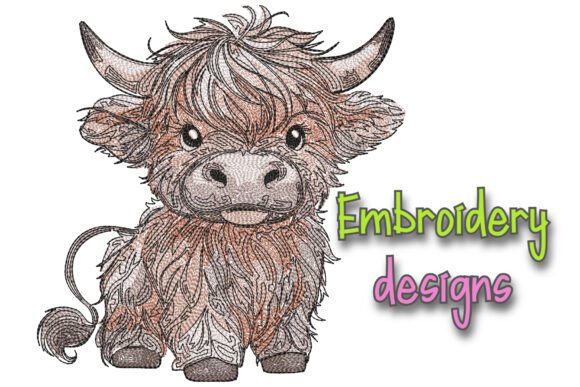
Cute Little Bull Embroidery Design
A Friendly, Farm-Charm Brand Asset for Small Business Merch
As an embroidery designer who’s developed and tested hundreds of designs for small businesses—from indie bakeries to pet boutiques—I immediately recognized the potential in the Cute Little Bull Embroidery Design. Its title and description—“Adorable little bull embroidery design, perfect for kids apparel, farm-themed projects, and unique gifts”—signal a warm, approachable visual personality. It reads as playful yet professional, handmade but polished, and distinctly rooted in the Farm Animals category without leaning into cartoonish cliché or rustic overkill. That balance is rare—and valuable—for brands that want charm without sacrificing credibility.
Where This Machine Embroidery Design Shines in Real Business Use
The Cute Little Bull Embroidery Design works exceptionally well across high-impact small business applications. As an embroidered patch, it holds strong visual identity on denim jackets, tote bags, and staff aprons—especially for cafés with farm-to-table branding or florists using earthy, pastoral motifs. On cap embroidery, its compact silhouette reads clearly at 2.5”–3” width, avoiding distortion on curved fronts. For custom apparel, it adds subtle brand warmth to left-chest placements on unisex tees or work shirts—ideal for local farms, children’s boutiques, or craft studios offering handmade product lines.
It also elevates tote bag design and apron embroidery by delivering instant recognition without overwhelming the item’s function. I’ve seen clients use it as a secondary logo beside their main wordmark—adding dimension to small business merch while reinforcing a friendly, grounded brand voice. As a product packaging accent (e.g., stitched onto twine-tied gift boxes or fabric tags), it subtly reinforces authenticity and care—key drivers for Etsy sellers and handmade brands.
Smart Placement Matters: Where to Use With Intention
Like any machine embroidery design, the Cute Little Bull Embroidery Design performs best when matched to the right context. Avoid placing it below 1.75” on curved surfaces like baseball cap backs or tight sleeve cuffs—fine details may blur or lose definition. On dark uniforms (navy, charcoal, black), confirm thread color contrast early: light tan or cream bull outlines can vanish without careful testing. Likewise, highly textured fabrics—burlap, heavy canvas, or terry cloth—require extra stabilizer to prevent stitch pull or shadowing.
If your version includes fine internal line work or dense fill areas, assess stitch density before scaling down for tiny patches (under 1.5”). High density + small size = risk of puckering or thread breakage during commercial embroidery runs. And while it’s charming on kids’ apparel, remember: frequent washing demands robust digitizing—so always verify durability with a wash test before committing to bulk production.
How It Strengthens Brand Identity and Customer Trust
For small businesses, consistency is currency—and the Cute Little Bull Embroidery Design supports that beautifully. Its cohesive shape, balanced proportions, and expressive simplicity make it instantly recognizable across formats: whether stitched on a barista’s apron, heat-applied as a woven patch on a tote, or scaled for a printable mockup shared with wholesale partners. That visual continuity builds brand identity without shouting—it whispers “thoughtful,” “local,” and “authentically made.”
Customers respond to sincerity in handmade presentation, and this embroidery file delivers it. Unlike generic clip art or over-digitized stock, it feels intentional—like part of a curated design assets library rather than a filler graphic. That perception lifts perceived product value, increases buyer engagement, and fosters trust, especially among audiences who prioritize craftsmanship and story-driven brands.
Practical Embroidery Designer Notes Before You Stitch
Before launching into production, run these checks:
- Test in black and white first—confirm legibility and balance without color distraction.
- Check minimum viable size: Does the Cute Little Bull Embroidery Design retain clarity at your smallest intended patch size? If not, simplify or re-digitize key outlines.
- Review thread color contrast against your base fabric—especially for dark or variegated textiles.
- Inspect spacing between elements: Tight loops or overlapping fills may cause nesting or skipped stitches on low-tension machines.
- Confirm hoop size compatibility—some versions may require larger hoops; verify before quoting clients.
- Test on real fabric with your preferred stabilizer combo—cutaway vs. tear-away depends heavily on fabric texture and end-use.
- Create a physical mockup for client approval—not just a digital preview—to manage expectations around texture, sheen, and scale.
- Compare beside existing design assets: Does it harmonize with your logo, typography, and other icons—or clash tonally?
- Verify commercial licensing before using in client work, wholesale orders, or resale merchandise. The description notes it’s “a fun and charming addition to any collection”—but always confirm permissions for commercial embroidery and digital embroidery file redistribution.
Final Thought: A Versatile, Values-Aligned Embroidery File
The Cute Little Bull Embroidery Design isn’t just decorative—it’s a functional brand tool. When applied with intention, it helps small businesses communicate warmth, authenticity, and attention to detail—all without saying a word. Whether you’re stitching for a flower shop with pasture-inspired branding, a children’s boutique curating farm-themed collections, or a craft studio building signature handmade product lines, this Embroidery asset earns its place in your working library. Just remember: great design meets great execution—and that starts with smart prep, real-fabric testing, and alignment with your broader brand identity.