Simple Frothy Beer Mug Embroidery Design
A Cheerful, No-Fuss Mug That Actually Stitches Well
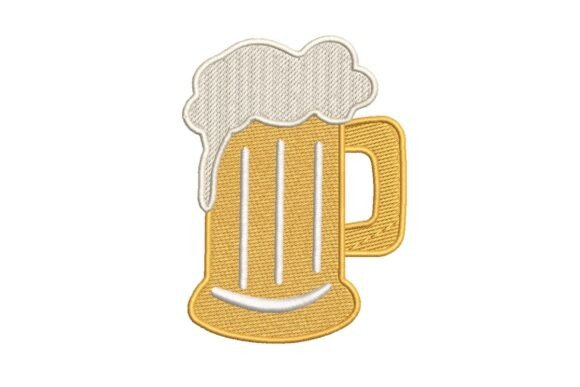
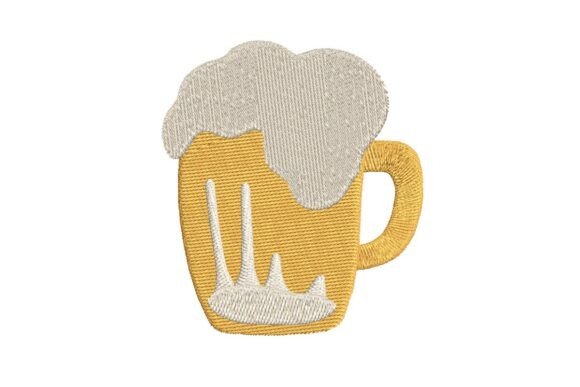
Let’s be honest: cartoon beer mugs are everywhere—but most don’t hold up in real embroidery. I pulled the Simple Frothy Beer Mug Embroidery Design into my workspace last week to test it on a batch of custom tote bags for a local brewery’s summer pop-up. Right away, I noticed what sets it apart: clean outlines, generous negative space around the mug, and that frothy head built with smart fill stitch gradation—not just dense satin overkill. It reads as playful but not childish, casual but not sloppy. That balance matters when you’re stitching for adults who want humor without looking like they’re wearing a cartoon cereal box.
Where This Design Naturally Shines
This isn’t a design that fights its way onto fabric—it leans into its strengths. On medium-weight cotton canvas (think tote bags, aprons, tea towels), the golden-yellow mug pops beautifully against navy, charcoal, or natural beige. I stitched it on a crewneck sweatshirt using a lightweight cutaway stabilizer—and the mug held crisp shape across the shoulder seam, no puckering. It also worked cleanly on a curved baseball cap front, thanks to its compact height and lack of fine interior details like tiny bubbles or script lettering.
- Tote bag design: Centered above the pocket? Perfect. The mug’s width fits comfortably within standard 4x4 hoops without scaling down.
- Sweatshirt embroidery: Minimal stitch density means less bulk—ideal for cozy, wearable pieces customers actually keep.
- Embroidered patch: Clean edges and bold silhouette make it easy to turn into a sew-on or iron-on patch for jackets or backpacks.
- Holiday embroidery: Surprisingly versatile—swap thread colors to mint and white for a “mint julep” twist at spring gatherings, or deep amber and cream for fall-themed kitchen towels.
Where to Pause—and Test First
Don’t assume this design is foolproof on every surface. I learned that the hard way when I tried it on a lightweight baby onesie. The froth detail—though charming—broke up slightly on ultra-thin knit fabric, even with tear-away + topping. The lesson? Small hoop sizes demand simplicity—and this design walks that line closely, but doesn’t quite clear it for sub-3-inch applications. Likewise, on dark fabric, the golden-yellow mug needs high-contrast thread (think bright gold or lemon yellow) to avoid looking muddy. And while it’s labeled under Wine, remember: this is a beer mug—so use it where that context lands well (brewery merch, pub crawls, dad gifts), not for formal wine tastings or bridal shower favors.
Also worth noting: the design relies on visual weight, not intricate texture. That makes it forgiving on textured fabrics like terry cloth (great for kitchen towels), but less effective on heavily napped fleece—where the froth can blur. If you’re planning commercial embroidery for a small shop product line, run a test on your most common fabric blend first. Don’t skip the stabilizer check—even simple designs can shift on stretchy blends.
What It Adds to Your Handmade Product—Beyond the Stitch
Customers respond to clarity and confidence. When the Simple Frothy Beer Mug Embroidery Design stitches cleanly, it signals craftsmanship—not just charm. I’ve seen Etsy sellers bundle it with matching “Cheers!” text files and watch conversion rates climb on personalized gift listings. Why? Because it feels intentional, not clip-art-y. It supports brand consistency for craft businesses leaning into lighthearted, approachable identities—think local coffee roasters adding beer-themed merch alongside their latte art, or boutique gift shops curating “fun-first” holiday bundles.
It also builds trust in handmade presentation. Unlike overly detailed machine embroidery designs that look stiff or pixelated when scaled, this one breathes. The mug’s rounded base sits naturally on curved surfaces (pillow covers, curved cap fronts), and the froth has gentle variation—not robotic repetition. That subtle humanity translates to perceived value. Buyers don’t just see a mug; they see a moment: relaxed, celebratory, shared.
Practical Designer Notes Before You Stitch
Before committing to a full production run—or listing your finished product on Etsy—here’s what I do every time with this file:
- Run a test stitch on scrap fabric using your exact thread colors and stabilizer combo.
- Check how the froth reads in black-and-white mockups—some screens flatten contrast, and you want that head to stay distinct.
- Compare light and dark fabric backgrounds side-by-side. Does the golden-yellow hold warmth on black? Does it fade on oatmeal?
- Verify hoop size compatibility. While it fits standard 4x4, confirm whether your machine handles the file natively—or if you’ll need to resize (and risk distorting the froth’s proportion).
- Inspect small details at 200% zoom in your embroidery software. Are stitch jumps minimal? Is there any unnecessary underlay in the handle area?
- Confirm licensing terms before selling finished items or bundling the digital embroidery file as part of a craft business kit.
And one final note: this design works best when it’s *part* of something—not the whole story. Pair it with a short phrase (“Hoppy Hour”, “Mug Life”, “Brew & You”) or use it as a repeating motif along a tea towel hem. Its strength is in its simplicity, so let it breathe.
Final Thought: A Reliable Tool, Not a Trend
The Simple Frothy Beer Mug Embroidery Design won’t win awards for technical complexity—but then again, neither does a perfectly poured pint. It’s reliable, recognizable, and rooted in real use. For small shop owners building seasonal collections, Etsy sellers refreshing summer listings, or crafters making personalized gifts that land with warmth and wit—it’s a quiet workhorse. Just remember: even cheerful mugs deserve thoughtful stitching. Test it. Trust your stabilizer. And pour yourself something cold while you do.