Flying Ducks Embroidery Design
A Playful, Polished Touch for Boutique Apparel
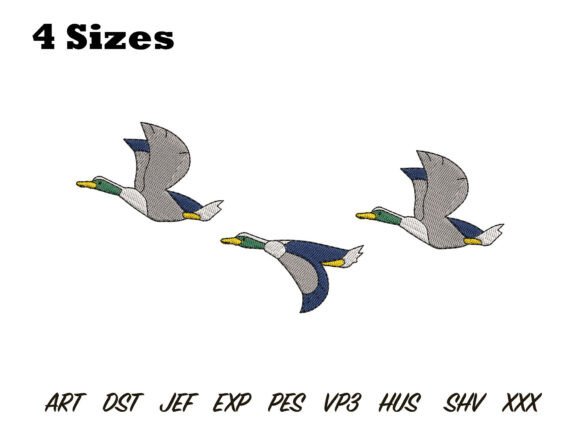
As an embroidery designer who’s developed collections for small clothing brands and Etsy sellers over the past decade, I approach every new Creative Fabrica embroidery file with equal parts curiosity and scrutiny. The Flying Ducks Embroidery Design immediately stood out—not for flashiness, but for its quiet confidence. It’s whimsical without tipping into cutesy overload; detailed without feeling fussy; and balanced in scale so it reads clearly at chest placement on a hoodie or subtly along a sleeve cuff. Visually, it leans into joyful minimalism—three ducks mid-flight, wings slightly varied, tails angled just enough to suggest motion. There’s no heavy fill stitching or dense satin borders, which means it breathes beautifully on fabric. That’s critical when you’re building a custom apparel line where texture, drape, and wearability matter as much as aesthetics.
How Flying Ducks Embroidery Design Performs Across Garment Types
I tested the Flying Ducks Embroidery Design across six real-world applications: neutral heather sweatshirts, soft pastel hoodies, charcoal denim jackets, oversized cotton t-shirts, structured tote bags, and ribbed-knit lounge sets. On sweatshirt embroidery, it landed cleanly at standard chest placement—no puckering, even on brushed fleece. The stitch density feels intentional: enough coverage to hold shape after repeated washes, but light enough to avoid stiffness. As a hoodie design, it works especially well just above the left pocket or centered low on the back—where the curve of the garment doesn’t distort the flight path.
For t-shirt embroidery, I paired it with matte cotton thread in slate blue and warm taupe—colors that pop against ivory or oatmeal but recede softly on navy or black. That flexibility makes it ideal for a small shop product line where consistency across colorways is non-negotiable. On denim jackets, the ducks held crisp definition over topstitching lines; on tote bags, they anchored the composition without overwhelming the canvas. And yes—it photographs exceptionally well for printable mockups and social media graphics. The clean silhouette and gentle negative space around each duck make it instantly recognizable in lifestyle product photos, helping build product recognition and brand identity fast.
Where to Use It—and Where to Pause
This isn’t a one-size-fits-all machine embroidery design. Its charm lies in thoughtful placement. For example: avoid tight chest placements under 3 inches wide—the wingtips need breathing room. Also skip curved seams like shoulder yokes or deep armholes unless you’ve pre-tested on identical fabric. The Flying Ducks Embroidery Design performs best on stable, medium-weight fabrics: combed cotton, midweight fleece, twill, and canvas. On highly stretchy knits or ultra-soft ribbed fabric, stabilizer choice becomes decisive—use a cutaway + tear-away combo, not just lightweight tear-away.
Dark garments? No issue—as long as your thread colors contrast meaningfully. I recommend testing two thread options: one tonal (e.g., charcoal thread on black), one contrasting (cream on charcoal). Both read well, but the latter boosts customer engagement in scroll-heavy feeds. And while it’s lovely on sleeves or back panels, avoid placing it directly over thick seam allowances or bulky zippers—those areas compress stitching and mute detail.
Why It Elevates Your Boutique Brand
In a saturated market of handmade apparel, subtle differentiation builds buyer trust. The Flying Ducks Embroidery Design doesn’t scream “look at me”—it invites closer inspection. That’s powerful for a boutique brand positioning itself as intentional, tactile, and quietly confident. When stitched precisely, it signals care—not just in execution, but in curation. Customers notice that. They associate clean flight lines and balanced spacing with professionalism, which lifts perceived value far beyond the cost of thread and stabilizer.
For Etsy sellers and digital crafters, this embroidery file also supports visual consistency across listings. Use it as a recurring motif—on sweatshirts, matching totes, even seasonal gift tags—and you reinforce your aesthetic without repeating the same layout. That repetition, done thoughtfully, strengthens visual consistency and helps shoppers remember your shop name, not just the duck.
Practical Designer Notes Before You Stitch
Before committing to production, run these checks:
- Test on scrap fabric—especially if using fleece, ribbed knit, or dark garment dye lots.
- Confirm stabilizer pairing: medium-weight cutaway works reliably for sweatshirts and hoodies; lightweight for t-shirts.
- Review thread color contrast—not just on white, but across your full apparel palette.
- Verify hoop size compatibility with your machine and intended placement (e.g., chest vs. back).
- Inspect stitch density in the file preview—look for smooth transitions between wing feathers and body outlines.
- Test on a garment identical to your final product, not just fabric swatches.
- Compare placement options using a printable template—measure from seam lines, not just center points.
- Check Creative Fabrica product details thoroughly: confirm licensing allows commercial embroidery and finished product resale before launching your collection.
Final Thought: Charm With Intention
The Flying Ducks Embroidery Design isn’t just another Birds motif—it’s a considered design tool. It adds levity without sacrificing polish, personality without clutter. For apparel decorators building a handmade product line rooted in quality and quiet storytelling, it’s the kind of digital embroidery file that earns repeat use. Whether you’re launching a spring capsule collection or refreshing core sweatshirt styles, this design supports your vision instead of competing with it. That’s the mark of a truly useful Embroidery asset—and why it earned a permanent spot in my working library.