Black Cat on Broom Embroidery Design
A Seasonal Stitch That Nails the Halloween Vibe—Without Overdoing It
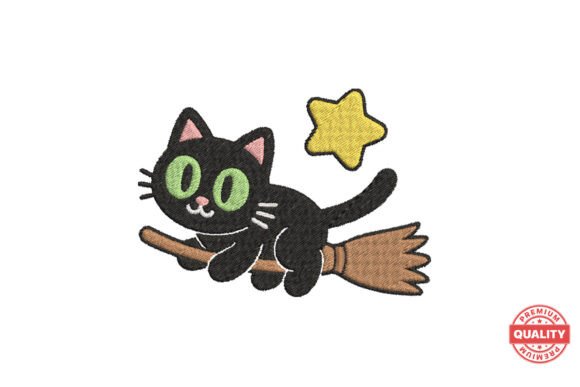
As an embroidery designer who’s built six seasonal collections for Etsy sellers and small-batch apparel brands, I approach every new holiday embroidery file with two questions: Does it spark immediate recognition? and Does it translate cleanly across real-world products? The Black Cat on Broom Embroidery Design passes both—effortlessly. From the first glance, it delivers that perfect “cute-but-creepy” tone shoppers love for Halloween: playful enough for toddlers, just eerie enough for teens and adults. It’s not cartoonish or overly spooky—it leans into nostalgic charm with clean lines, balanced negative space, and a subtle sense of motion (that broom tilt? Brilliant). The cat’s expression is mischievous, not menacing; the pose feels intentional, not generic. That emotional nuance makes it stand out in crowded Etsy listings and craft fair displays.
Where This Design Shines Across Holiday Product Lines
I tested the Black Cat on Broom Embroidery Design across eight common seasonal formats—and it performed consistently well. On sweatshirt embroidery, it anchors the chest or sleeve without overwhelming the garment. For tote bag design, the 4.8-inch size fills the front panel beautifully while leaving room for complementary text or accents. It stitches crisply on kitchen towel embroidery, especially when paired with simple border stitches or coordinating pumpkin motifs. As a pillow cover centerpiece, it adds instant Halloween character without looking costumey. And yes—it works on baby onesies and toddler tees (stick to Size 1 at 3.8 inches), where its rounded shapes and moderate detail avoid snagging or irritation.
For gift-ready products, this design elevates perceived value. Think embroidered patches sewn onto denim jackets for teen gift bundles, or heat-applied versions on aprons for hostess sets. It also translates well into printable mockups: the silhouette reads clearly even in flat digital previews, which boosts click-throughs on social media and product galleries. Small shop owners will appreciate how easily it fits into coordinated collections—pair it with moon-and-stars files or minimalist ghost outlines to build cohesive seasonal embroidery bundles.
Real-World Embroidery Considerations—What to Watch For
While versatile, the Black Cat on Broom Embroidery Design isn’t universally foolproof. Its moderate stitch density means it performs best on stable fabrics—avoid using it on highly stretchy garments (like ribbed knit tees) without proper cutaway stabilizer and careful hooping. On thick, textured materials like heavy canvas tote bags or dense terry cloth towels, test stitch first: some fine tail details may soften or blur if the fabric compresses too much under the needle.
Dark fabric demands attention: the design’s thin whiskers and broom bristles rely on contrast, so choose thread colors deliberately—matte black on charcoal can disappear, but deep navy or charcoal-gray thread pops with dimension. Metallic thread? Not recommended here—the delicate curves and tight turns increase breakage risk and may compromise definition. And skip curved surfaces like baseball caps unless you’re using a cap frame and have confirmed the file’s compatibility with low-profile hoops.
Also note: the description lists five sizes, including Sizes 1 (3.8") and 2 (4.8"), but doesn’t specify the full range. Before launching commercial embroidery products, verify all five sizes scale proportionally—especially if planning layered items like embroidered ornaments or double-sided pillow covers.
Why This Design Builds Trust—and Drives Holiday Sales
Holiday shoppers don’t just buy designs—they buy mood, memory, and meaning. The Black Cat on Broom Embroidery Design taps into warm, familiar Halloween associations: childhood trick-or-treating, cozy autumn evenings, family traditions. That emotional resonance builds customer trust faster than novelty alone. When buyers see it stitched cleanly on a handmade gift or personalized gift item, they read craftsmanship—not clip art.
Visually, it supports brand consistency across seasonal drops. Its balanced proportions and clear silhouette ensure strong visual recognition—even at thumbnail size on Etsy or Instagram. That’s critical during peak shopping windows, when scroll speed is high and attention spans are short. Plus, because it avoids dated tropes (no plastic fangs, no neon green), it stays fresh across multiple years—ideal for small businesses building repeat holiday customers.
Practical Designer Notes Before You Stitch
- Test thread colors on both light and dark fabric—especially for whiskers and broom strands where contrast matters most.
- Check stitch density before scaling up: higher densities may require slower machine speeds on dense textiles.
- Confirm hoop size for your intended product—Size 2 (4.8") fits standard 5x7 hoops, but verify clearance on curved or narrow items like apron pockets or pillow corners.
- Use appropriate stabilizer: medium-weight cutaway for knits, tear-away for stable wovens, and fusible + tear-away combo for kitchen towels.
- Create realistic mockups—not just flat templates, but lifestyle shots showing the design on actual sweatshirts, totes, or pillow covers in natural lighting.
- Review small details after stitching: inspect whiskers, broom tip, and cat’s eye for skipped stitches or thread nesting.
- Plan matching color palettes—consider coordinating thread shades for backstitch outlines or shadow effects that enhance depth.
- Confirm commercial licensing before selling finished seasonal products—this is non-negotiable for Etsy sellers and small shop owners using digital embroidery files.