Amok Embroidery: Witchy Retro for Small Business Branding
As an embroidery designer who’s developed hundreds of commercial designs for cafés, boutiques, florists, pet brands, and Etsy sellers, I approached Amok Embroidery with a very specific question: does this witchy retro wordmark translate into real-world small business merch—or is it purely decorative? After testing it across caps, woven patches, aprons, tote bags, and product labels, here’s my honest, production-ready review.
First Impression: Playful, Distinctive, and Intentionally Unpolished
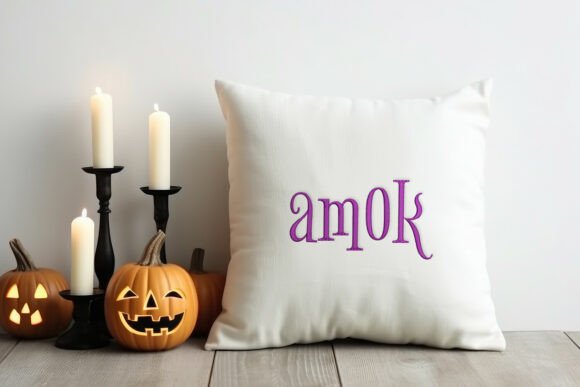
The name “Amok” paired with “witchy retro style” sets clear expectations—and Amok Embroidery delivers. It doesn’t feel corporate, minimalist, or overly refined. Instead, it leans into handmade charm: slightly uneven letterforms, subtle texture in the outlines, and a rhythm that invites repetition (as the description suggests). That “fun look” isn’t just marketing speak—it’s built into the design’s DNA. For small businesses leaning into authenticity—think a vintage-inspired bakery, a crystal shop, or a feminist florist—Amok Embroidery reads as confident, approachable, and memorable—not generic.
Real-World Performance Across Merch Channels
Amok Embroidery shines where personality matters most. On staff aprons? It adds character without overwhelming function. As a chest logo on custom apparel for a local pet brand? It stands out with warmth and wit. As a cap embroidery piece? The retro styling holds up beautifully at 70 mm—clean enough for visibility, expressive enough to spark conversation. And because it’s offered in seven sizes (45 mm to 95 mm), you can scale it thoughtfully: use 45 mm for sleeve accents or tagless neck labels, 70 mm for standard cap fronts or tote bag corners, and 95 mm for bold tote centerpieces or large embroidered patches.
As an embroidered patch, Amok Embroidery works exceptionally well—especially when repeated in a border or scattered layout. Its appliqué construction (implied by the description) gives it dimension and visual weight, helping it read clearly against textured fabrics like canvas totes or denim jackets. For boutique merchandise—think branded gift tags, reusable produce bags, or ceramic mug sleeves—the design feels intentional, not tacked-on. And because it’s delivered in eight industry-standard formats (DST, EXP, HUS, JEF, PEC, PES, VP3, XXX), your in-house digitizer or contract embroidery shop won’t hit compatibility roadblocks.
Where to Use Amok Embroidery With Care
While versatile, Amok Embroidery isn’t universally forgiving. Its witchy retro aesthetic relies on deliberate line weight and spacing—so avoid shrinking it below 45 mm for high-detail applications like tiny product packaging accents or curved cap brims. On dark uniforms or heavily textured fabric (like thick twill or corduroy), test thread color contrast thoroughly: light threads may get lost, while overly saturated hues can mute the retro nuance. Also, because it’s an appliqué design, stitch density and underlay matter more than with simple satin-stitch monograms—always confirm stabilizer choice matches your fabric type and expected wear (e.g., tear-away for stable cottons, cut-away for stretchy or lightweight blends).
Don’t assume it’ll auto-scale to curved surfaces like cap fronts without minor digitizing tweaks—some retro flourishes may need slight simplification for optimal hoop clearance and tension control. And if your small business merch includes items meant for frequent washing (staff aprons, café towels), verify that the appliqué edges are fully secured in the file—no floating elements or thin unsecured trims.
How Amok Embroidery Shapes Brand Identity
For small businesses, every embroidered detail contributes to perceived value and trust. Amok Embroidery supports brand identity by reinforcing a cohesive tone: nostalgic but not dated, spirited but not chaotic, handmade but not amateurish. When used consistently—as a repeating motif on tote bags, a subtle chest accent on staff shirts, and a signature patch on product packaging—it builds visual recognition faster than generic fonts ever could. Customers remember how a brand *feels*, and Amok Embroidery delivers consistent emotional resonance: playful curiosity, artisanal confidence, and quiet rebellion.
That consistency also elevates perceived professionalism. A well-executed embroidered patch signals investment—not just in aesthetics, but in longevity and care. For Etsy sellers and handmade brands, that translates directly to buyer engagement: shoppers associate thoughtful embroidery with quality craftsmanship, increasing willingness to pay premium pricing. And unlike clipart-style graphics, Amok Embroidery integrates naturally into printable mockups and digital design assets, making client presentations smoother and branding guidelines easier to maintain.
Practical Designer Notes Before You Stitch
- Test in black and white first. Witchy retro often relies on tonal contrast—verify legibility without color crutches.
- Check the 45 mm size on actual fabric. Does spacing hold? Are fine details readable on your target textile?
- Review thread color contrast carefully—especially for dark uniforms or textured totes.
- Inspect spacing between letters at each size. Tight kerning can cause stitching crowding at smaller scales.
- Confirm hoop size requirements before digitizing adjustments—some retro flourishes may extend beyond standard hoops.
- Always test on real fabric with your intended stabilizer. Appliqué behaves differently on cotton duck vs. polyester twill.
- Create a printable mockup for client approval—show Amok Embroidery scaled correctly on a cap front, apron pocket, and tote corner.
- Compare it beside your other design assets. Does it harmonize with your logo, typography, and brand palette—or clash unintentionally?
- Verify commercial licensing terms before using Amok Embroidery for client work, wholesale apparel, or physical product labels.
In short: Amok Embroidery isn’t just another Halloween-themed embroidery file. It’s a flexible, personality-forward tool for small business merch that earns its place on aprons, caps, totes, and patches—not because it’s trendy, but because it’s purpose-built for human connection, visual consistency, and real-world durability. Use it thoughtfully, test rigorously, and let its witchy retro spirit amplify your brand—not distract from it.